
North Star Essence
Yoga for a City-Stressed Body
The modern city is alive with motion; traffic streaming like rivers, lights that never dim, the hum of constant connection. Yet for the body, this rhythm can be relentless. Shoulders inch toward ears, breath becomes shallow, and tension builds in quiet corners of muscle and mind. Yoga offers not just exercise, but sanctuary, a way to unwind the knots of city living and reconnect with inner spaciousness.
The City’s Imprint on the Body
Urban environments are designed for productivity, not restoration. Hours hunched over devices, long commutes, and overstimulating noise leave a residue on the nervous system. The signs are subtle yet insistent: tight hips from sitting, stiff neck from screens, shallow chest breathing from stress.
This is where yoga becomes medicine. By stretching fascia, lengthening the spine, and deepening the breath, yoga creates a counterbalance to the compression of city life. It asks the body to remember softness in a world that often asks only for speed.
Asanas for Urban Release
The beauty of yoga is its adaptability. A few targeted poses can transform the way a stressed body feels, even in the middle of a crowded apartment.
- Supported Forward Fold (Uttanasana): Resting torso over bent knees releases tension in the spine and quiets a racing mind.
- Seated Hip Opener (Sukhasana with forward lean): A balm for hips tightened by long hours of sitting.
- Neck and Shoulder Rolls: Simple, slow circles that dissolve the burden carried in the upper body.
- Legs Up the Wall (Viparita Karani): A gentle inversion that drains fatigue from the legs and soothes overstimulated nerves.
Each pose is not only physical but symbolic, a reminder that surrender, too, is strength.
The Breath as a Reset
In the city, breath often goes unnoticed, clipped and shallow. Bringing awareness to it is like opening a window in a stuffy room. For the city-stressed body, deep diaphragmatic breathing is key: inhaling fully into the belly, exhaling slowly to double the length. This calms the nervous system, clears mental fog, and rebalances energy.
Even a few conscious breaths before a meeting, on the subway, or at the end of the day can shift the body from survival mode into presence.
Creating a Yoga Ritual in Small Spaces
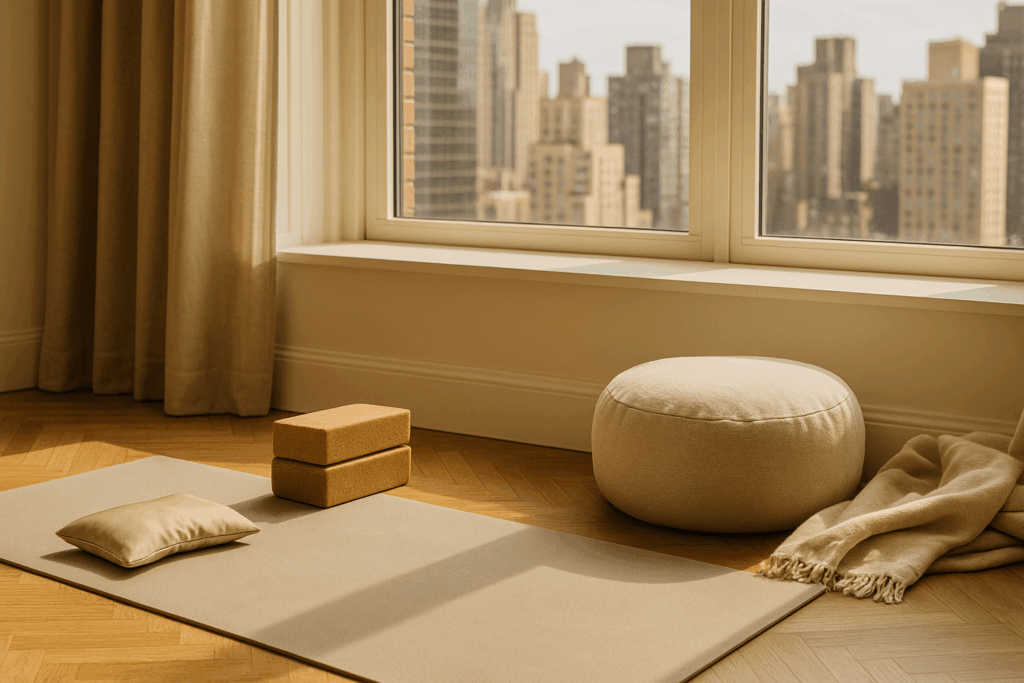
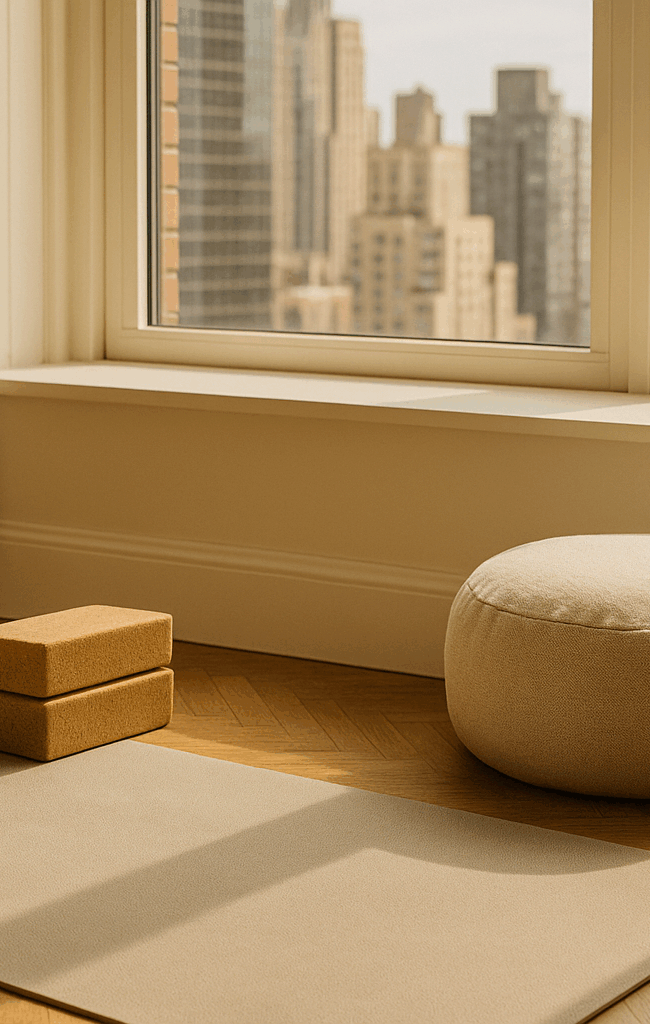
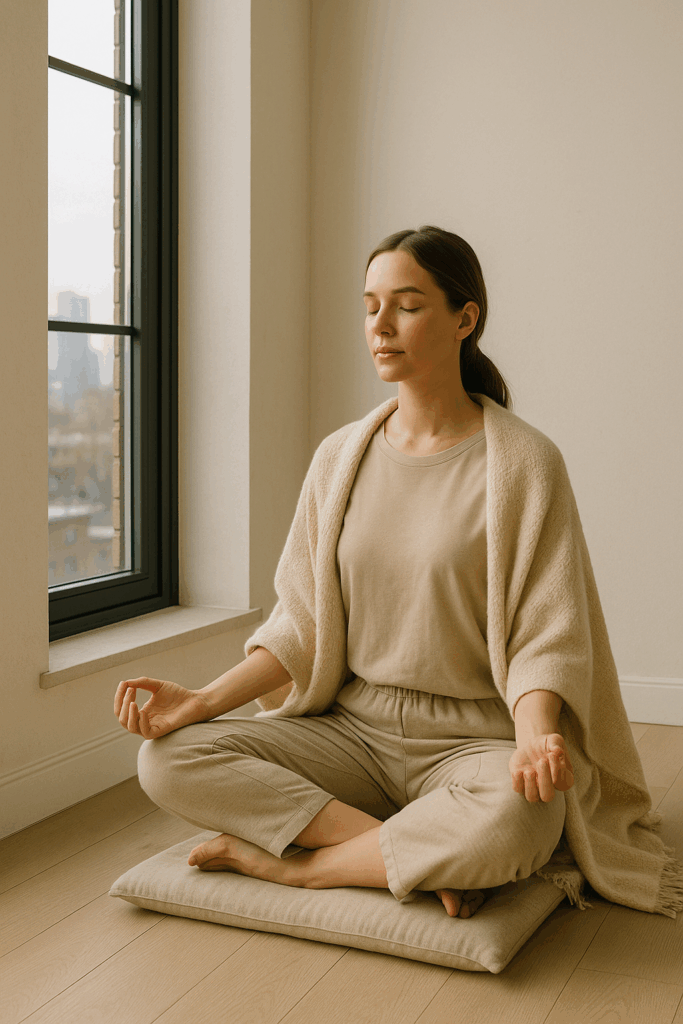
City apartments rarely offer sprawling yoga studios. But yoga thrives in intimacy. A corner by the window, a mat laid down with intention, a candle flickering at dusk, these small touches transform a square of floor into a sanctuary.
Pairing yoga with sensory cues deepens the ritual:
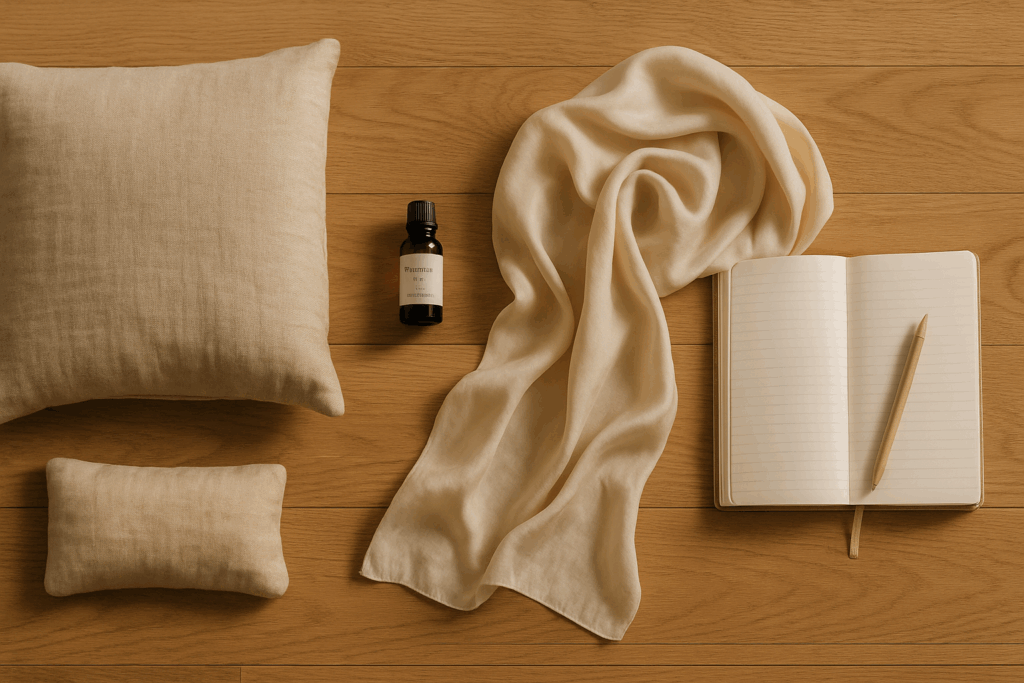
- Scent: A drop of jasmine or eucalyptus oil to ground.
- Sound: A soft playlist or even the hum of silence.
- Texture: A cashmere throw or linen cushion to remind the body of comfort.
With these elements, yoga becomes less about space and more about presence.
A Path Back to Balance
Yoga is not about escaping the city but learning to live within it differently. To meet its speed with slowness, its density with expansion, its noise with inner quiet. When practiced regularly, yoga reconditions the body to soften where it has hardened, to open where it has closed, and to breathe where it has forgotten to.
In this way, yoga is less an exercise routine and more an antidote a return to equilibrium in a world that rarely pauses. For the city-stressed body, it is a practice of remembering that beneath the skyscrapers and schedules, there is always stillness waiting to be found.
🤍 & Luminosity,
The North Star Essence Team
